


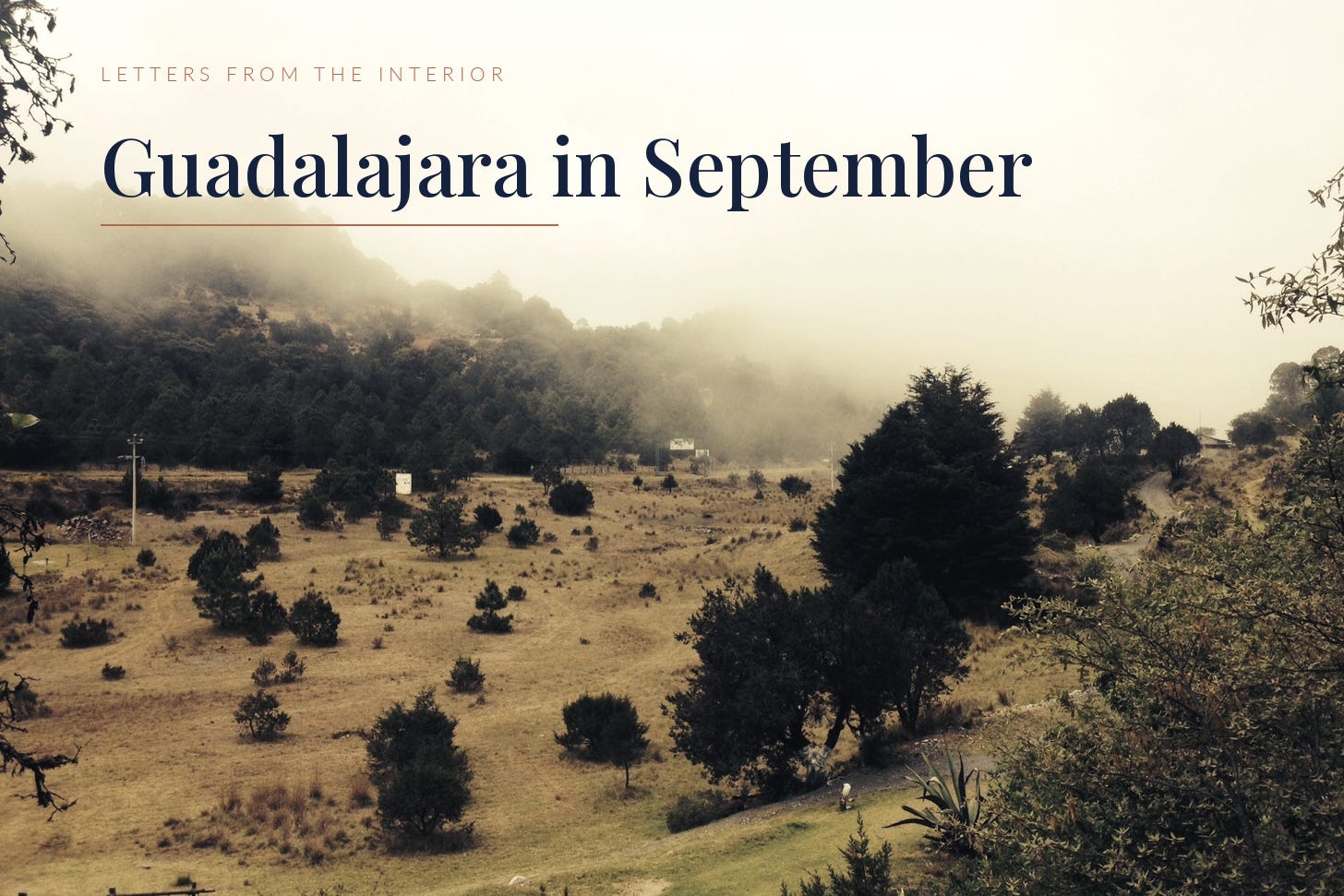
On Monday, the tenth of August, I opened a letter of acceptance for a paper at a conference in Guadalajara, on the tenth and eleventh of September. It carried a submission identification number, W26en_P098_en, which is the sort of detail that makes a thing feel real. The proposal was accepted on the first attempt. It was one of three pieces of work I had sent out inside a week, the others being a journal manuscript and a proposal for a symposium in New York next February.
Sending work out under my own name is new for me, and I want to say why. I have spent my working life in psychology, thirty years of it now, and almost all of that work has gone out under somebody else’s letterhead: a university, an agency, a program, a referral source. The work itself, I know how to do. Making a claim on a stranger’s attention is a separate act, and I had been avoiding it for a long time under the reasonable-sounding cover of being busy.
The acceptance arrived within days, and my first reaction was pleasure. The second was closer to vertigo, and it took me most of the week to work out what that was about. A refusal would have been familiar. I wrote here two weeks ago about thirty years of institutional withholding and what it does to a person’s sense of legitimacy, and about a story in which being overlooked has a shape you can live inside for a long time. A yes on the first attempt takes the shape away. There is nothing left to argue with, and nobody left to wait on, and what remains is the ordinary requirement to go and do the thing well.
The second thing that happened this month is that I went back to a mastermind group. I had been part of one before and let it lapse, in the way these arrangements lapse when nothing at all is wrong with them. Returning was easier than I expected and different from what I remembered, and the difference was what I carried into the room. This time, I sat down with a conference date and a manuscript already under review, and the conversation had somewhere to go.
What a group like that supplies is people who will ask what you are actually doing, on a schedule, without needing the answer to be impressive. I have coached long enough to know that most people carry their real ambitions alone, and that carrying them alone is what keeps them at the size of a wish. Saying a date out loud in front of others changes its status. It becomes a thing other people now expect of you, which is a form of help that feels like pressure for about a week and then feels like company.
The third thing is that I do not know what the next year holds. There is another book coming out in the fall and a board examination in early winter, and past those sit decisions I have not yet made along with several that are not mine to make. Something in me wants to arrange all of it into a plan, and the plan would be a fiction. What I have instead is a phrase I have been using with myself for a couple of weeks: that I am living in the mystery.
William Bridges made the point that every transition opens with an ending, and that the ending arrives first whether or not the change was chosen. This is the part people miss about welcome changes. A conference acceptance ends a version of me who had not yet asked for anything. A book coming out ends the private relationship I have had with a manuscript for two years, since publication makes it a thing readers own, and there is a loss in that even while it is the entire point of the work.
Grief attaches itself to gains. I have watched this in clinical practice for three decades, and I am still surprised by it in my own life. People arrive braced for the sorrow that comes with losses and get ambushed by the sorrow that comes with getting what they wanted. Left unnamed, that sorrow usually gets attributed to something else: ingratitude, or a creeping suspicion that the thing was never what you wanted after all. The feeling is doing something more useful than either of those. It is registering that a familiar arrangement has ended.
So the practice I am working with this month is a small one. When something opens, I try to name what closed alongside it, and I let the mourning have its few minutes without treating those minutes as evidence that I chose wrong. James Hollis writes about the second half of life turning on a change of question, from what the world asks of me to what wants to live through me, and one of the costs of that change is that the earlier answer has to be released. Living in the mystery, as far as I can tell, means declining to resolve the uncertainty prematurely into either optimism or dread, and getting on with the next concrete task while it stays unresolved.
The middle step of the five-step process in A Life Aligned is awareness, and this is what awareness looks like on an ordinary Tuesday. It is noticing the mourning underneath a good outcome and letting the noticing count as information about where you are. The registration form for Guadalajara is open on my desk, and I will fill it in this week. September will arrive whether or not I have made my peace with what it ends.
So, a question to carry into the week, if you want one. What has opened for you recently that you have not yet allowed yourself to mourn? And what would change if you gave that half an hour before the month is out?
— Mark
A Life Aligned is available in paperback, eBook, and audiobook from Amazon, Apple Books, Barnes & Noble, Kobo, and other retailers. You can find all formats at drmarkarcuri.com/a-life-aligned.
Dr. Mark A. Arcuri is an integrative coach, author, speaker, and psychology professional based in Querétaro, México.
If this letter met something in your own situation, please pass it along to someone who might be standing in a similar place.